

Cats are famous for being intuitive, observant, and a little mysterious. So, if you’re expecting a baby, you may wonder: Do cats know when you’re pregnant? While cats don’t understand pregnancy the way people do, they can pick up on changes in your scent, body language, and routine. Some cats may even respond with extra affection, protectiveness, or stress.
Can cats sense pregnancy?
In short, cats can often sense that something is different about you during pregnancy, but they don’t fully grasp what it means. Thanks to their sharp senses, they may detect subtle changes in your body and behavior before anyone else notices.
What science says
There isn’t much scientific research specifically on cats detecting human pregnancy. But studies on animal behavior suggest pets can pick up on hormonal shifts, emotional changes, and even physical differences in humans. Anecdotally, many pet parents say their cat acted differently once they became pregnant (e.g., by becoming clingier, more protective, or even more standoffish).

How cats might detect pregnancy
Cats are highly perceptive creatures. Here’s how they might sense pregnancy:
Changes in scent and hormones
Pregnancy comes with a surge of hormones, which can alter a person’s natural scent. Since cats have an extraordinary sense of smell (about 14 times stronger than ours), they may notice these shifts right away.
Hearing & sensitivity to sound
Cats also have an incredible hearing range. They can detect higher frequencies than humans, which may allow them to pick up on changes inside someone’s body.
Some people wonder if cats can hear a baby’s heartbeat. Typically, a fetal heartbeat becomes audible with a stethoscope around 18 to 20 weeks, so it’s possible cats might detect it later in pregnancy, especially if they’re snuggled close to your belly.
Seeking out warmth
Pregnant bodies often run warmer due to increased blood flow and metabolism. Cats love heat, so they may be drawn to nap on or near your belly simply because it feels cozy.
Reading behavior changes
Cats are excellent observers of human routines. They might notice if you’re moving differently, feeling sick, or setting up a new nursery. Since they thrive on consistency, even small shifts in your habits can signal to your cat that something big is happening.
How cats react to pregnancy
Every cat is unique, but many show noticeable behavior changes during their pet parent’s pregnancy.
- Increased affection – Some cats become extra cuddly, snuggling near your belly, kneading (or “making biscuits”), or curling up in your lap more often.
- Protectiveness – Others may follow you from room to room, sit guard nearby, or even bring you “gifts” as a way of caring for you.
- Mixed or negative reactions – Not all cats respond with affection. Some may avoid you, mark territory, or show signs of stress, especially if household routines change quickly.
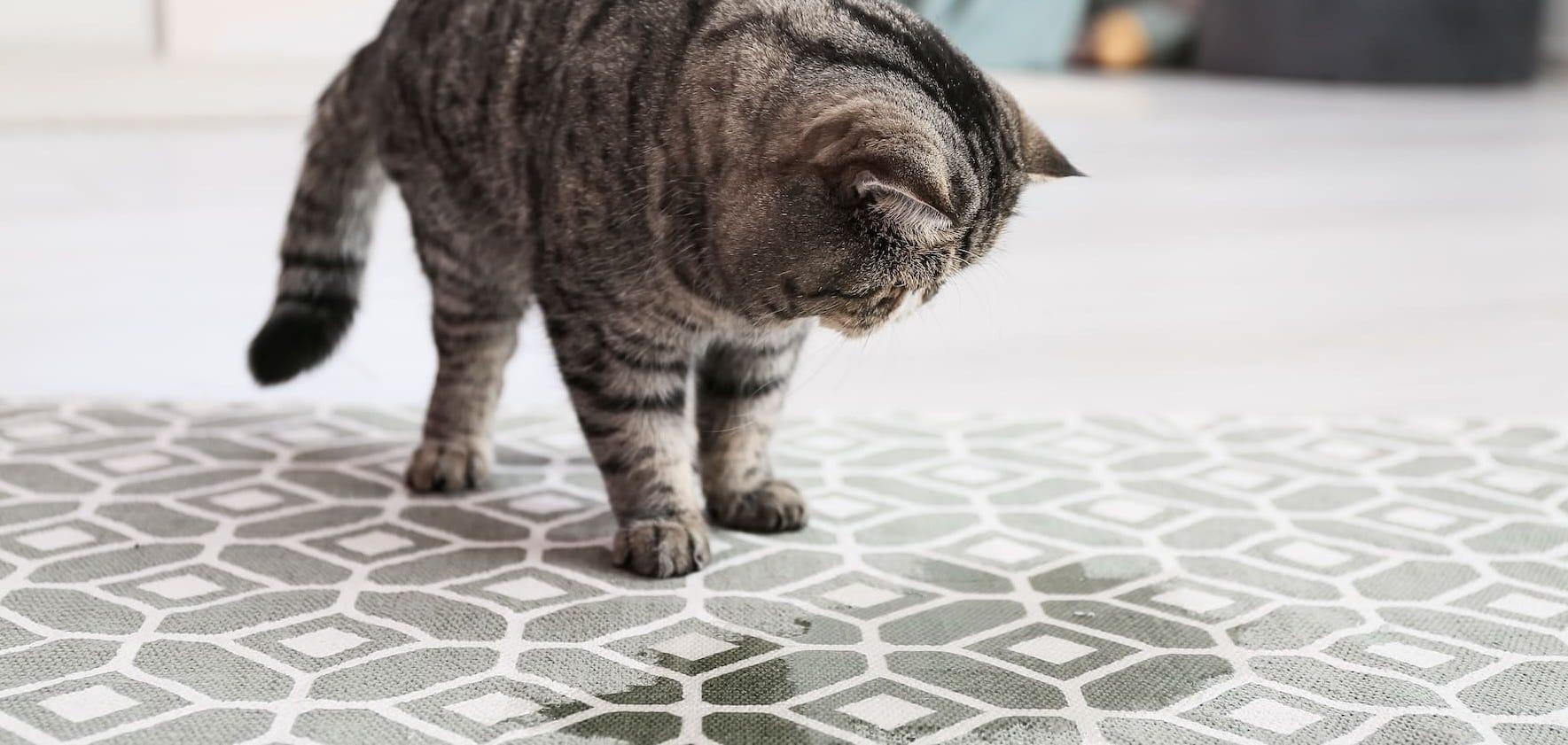
Cats are creatures of habit, so it’s important to give them the same love and attention during your pregnancy. Stick to your regular routine for as long as you can to avoid your cat developing behavioral problems. If a cat feels neglected, he may act aggressively or begin urinating outside of the litter box. If you begin to feel overwhelmed, talk to your partner or enlist a friend’s help to maintain an ideal routine for your cat.
Things to consider as a pregnant cat parent
Living with cats during pregnancy is usually safe, but there are a few things to keep in mind:
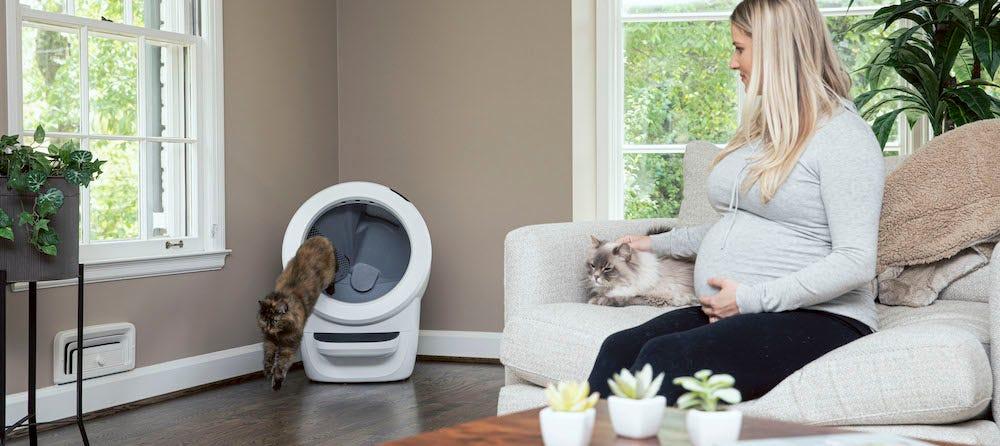
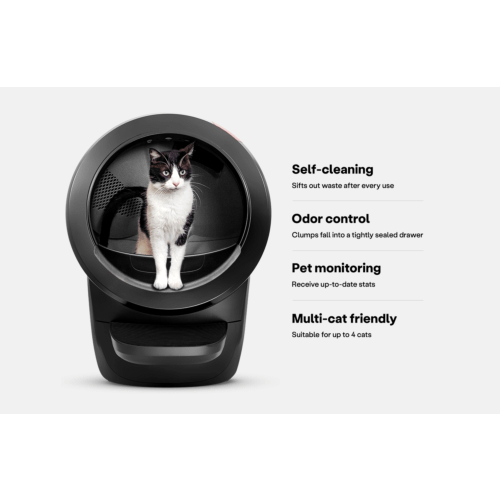
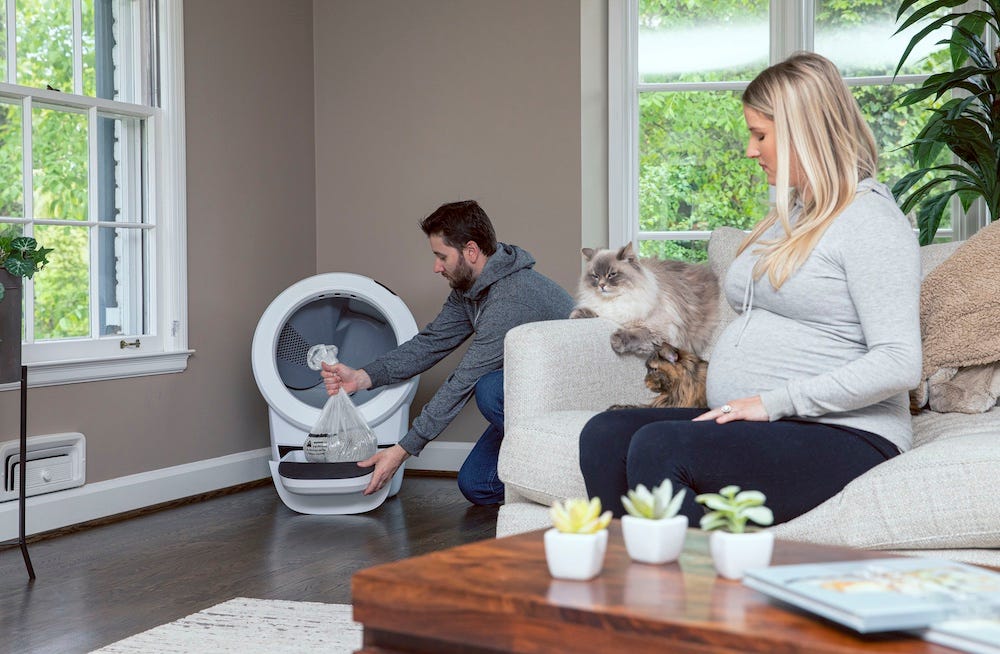
Toxoplasmosis – Pregnant people should avoid changing cat litter, since the parasite Toxoplasma gondii can pose risks during pregnancy. Ask a partner or family member to handle the litter box, or wear gloves and wash your hands thoroughly if you must do it yourself. This is a great time to try out a self-cleaning litter box like Litter-Robot, which frees you from scooping and gives your cat a clean place to go every time.
Preparing your cat before the baby arrives – Help your cat adjust early by gradually exposing them to baby-related smells (like lotions or powders) and sounds (such as recorded crying). If there are areas of the home you want to keep cat-free, start training them gently before the baby arrives.
Introducing your cat to the baby
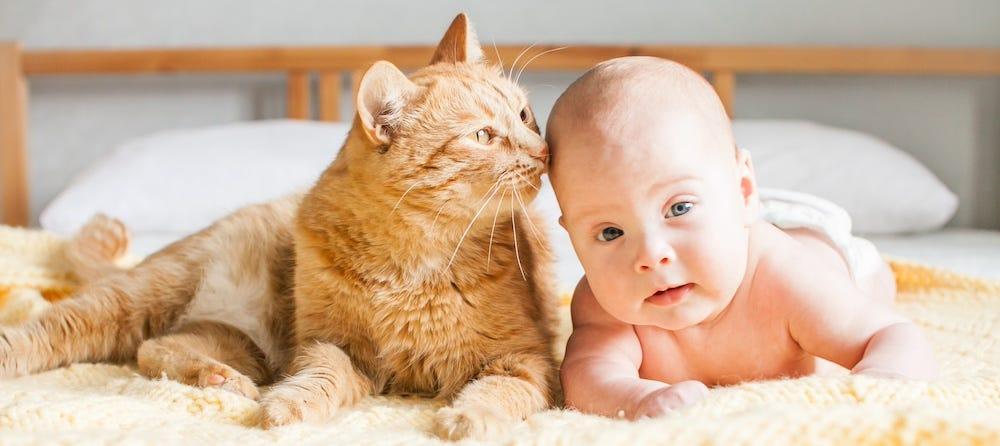
Before introducing your cat to your newborn, let them explore the baby’s scent by placing a used blanket, hat, or swaddle in a quiet area. Keep cribs and sleeping spaces off-limits with closed doors or a crib tent. When they meet, stay calm, supervise closely, and allow your cat to approach at their own pace without forcing interaction.
The bottom line
So, can cats tell if you’re pregnant? While they don’t understand pregnancy the way we do, cats can sense physical and emotional changes long before the baby arrives. Whether they react with extra affection, protectiveness, or stress, your cat is simply responding to the new chapter unfolding in your life.